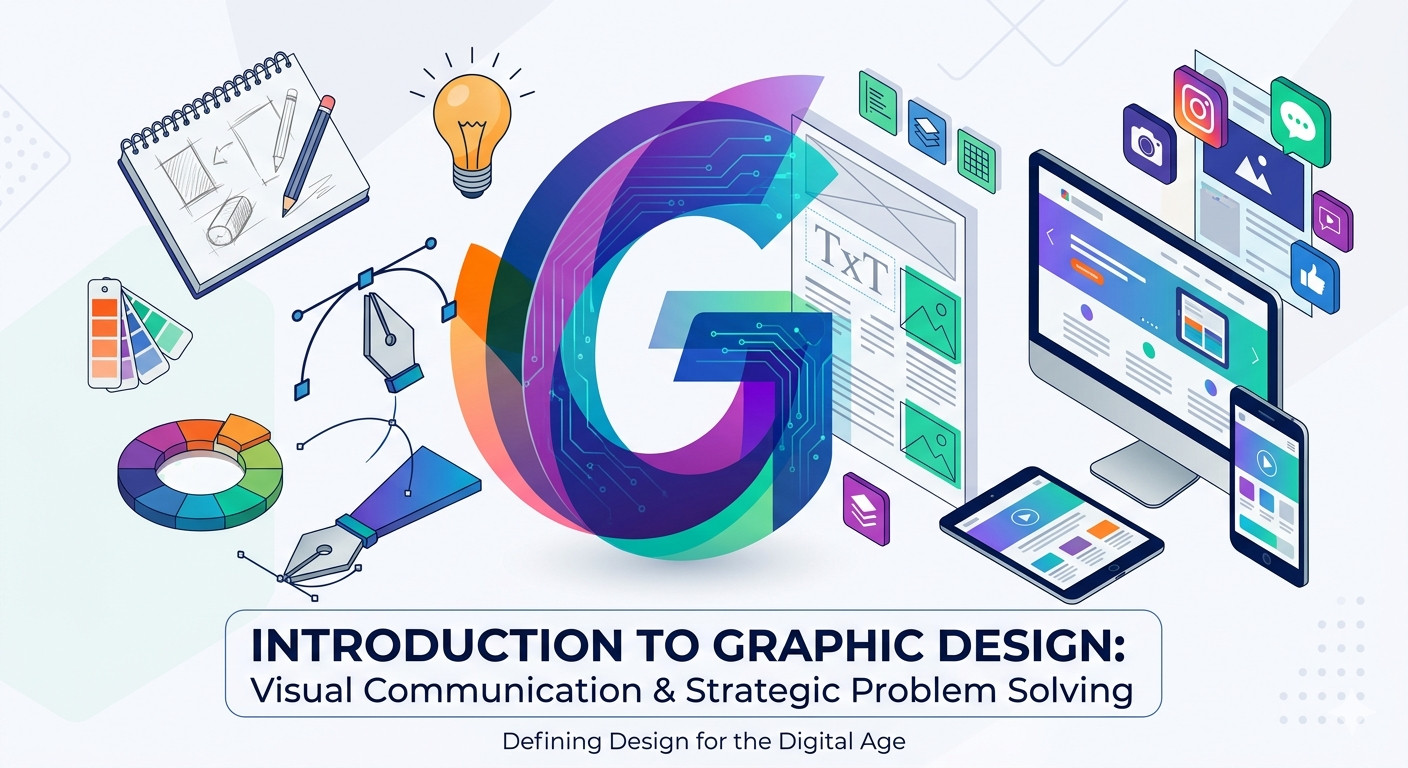
Introduction to Graphic Design – Foundations of Visual Communication
Welcome to Lesson 1 of your comprehensive design journey. Before diving into complex software like Adobe Photoshop, Illustrator, or Figma, a professional designer must first master the mental framework of design.
In this foundational lesson, we will dissect what graphic design truly is, strip away the misconceptions, and explore the core visual elements that make up every digital asset on the internet.

Lesson 1: Introduction to Graphic Design – Foundations of Visual Communication
Welcome to Lesson 1 of your comprehensive design journey. Before diving into complex software like Adobe Photoshop, Illustrator, or Figma, a professional designer must first master the mental framework of design.
In this foundational lesson, we will dissect what graphic design truly is, strip away the misconceptions, and explore the core visual elements that make up every digital asset on the internet.
1. Deconstructing the Definition: Art vs. Design
The most common misconception is that graphic design is simply "making things look beautiful." While aesthetics are important, there is a fundamental difference between fine art and graphic design:
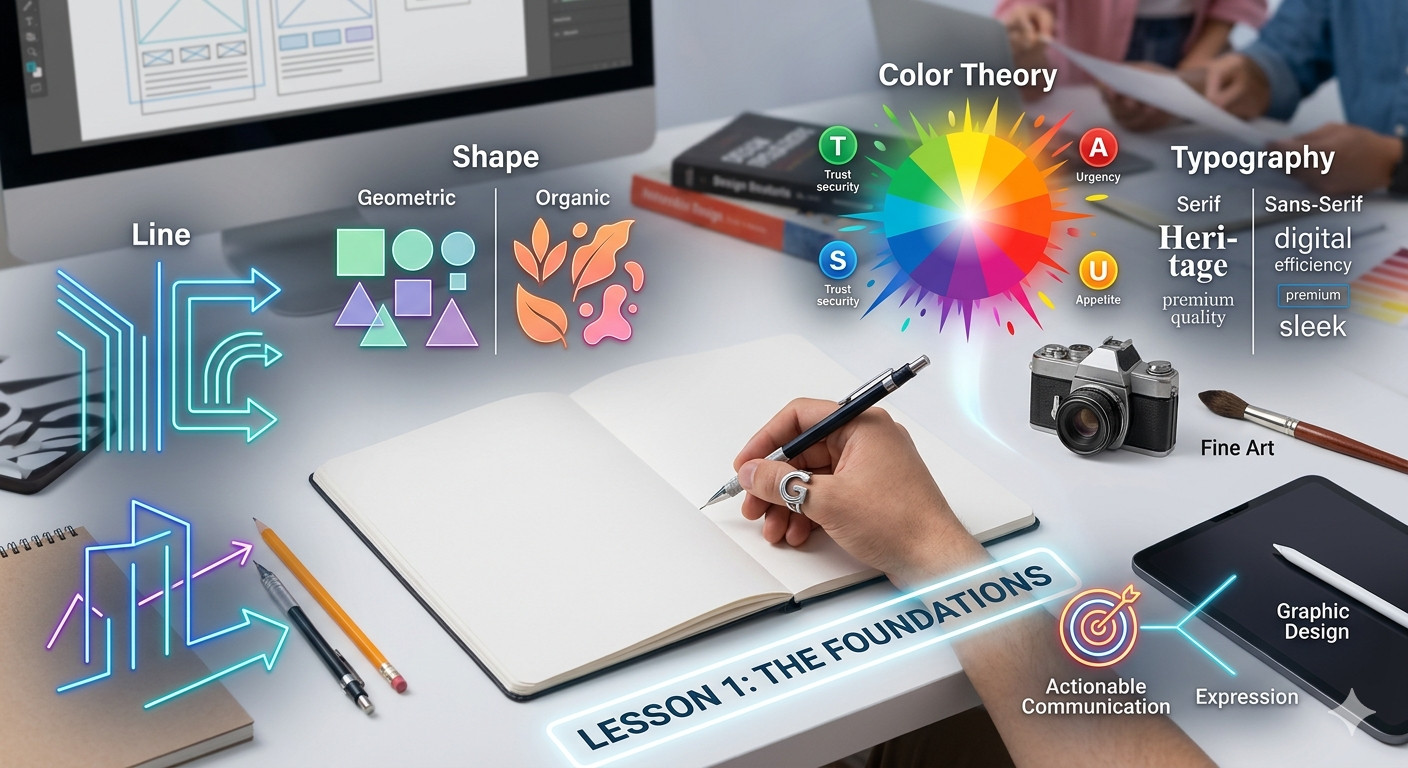
Fine Art is Expression: An artist begins with a blank canvas to express internal emotions, personal views, or abstract concepts. The interpretation is entirely up to the viewer.
Graphic Design is Actionable Communication: A designer begins with a specific problem, a target audience, and a clear goal. The success of a design is measured by how effectively it delivers a message and drives a user to take a specific action.

The Designer's Creed: "Design is not just what it looks like and feels like. Design is how it works."

2. The Anatomy of Sight: 4 Core Elements of Design
Every banner, UI interface, application screen, and social media graphic you see in the digital landscape is built from the exact same structural building blocks. To create impactful visuals, you must master the first four fundamental elements:
A. Line
A line is the simplest element, connecting two or more points. Lines can be thick, thin, dashed, curved, or jagged.
Function: Designers use lines to create boundaries, divide space, direct the viewer’s eyes to a specific focal point, or evoke hidden psychological responses (e.g., vertical lines signal stability, while diagonal lines suggest movement and energy).
B. Shape
When a line closes or meets its own start point, it forms a shape. Shapes are categorized into two main types:
Geometric Shapes: Squares, circles, and triangles. These are structured, symmetrical, and communicate order, professionalism, and efficiency.
Organic/Natural Shapes: Free-form, asymmetrical shapes found in nature (like leaves or water splashes). These communicate creativity, comfort, and accessibility.
C. Color Theory
Color is arguably the most powerful emotional tool in a designer’s toolkit. It does not just look vibrant; it dictates how a user feels about a brand.
The Psychological Hook: Why do fast-food brands use red and yellow? Because they stimulate appetite and urgency. Why do banks use blue? Because it communicates trust, security, and authority.
Contrast and Hierarchy: Color is used to separate crucial elements (like a "Buy Now" button) from secondary background elements.
D. Typography
Typography is the art and technique of arranging type (text) to make written language legible, readable, and visually appealing when displayed.
The Font Personality: Choosing a font family is like choosing an outfit for your words. A clean, modern Sans-Serif font (like Helvetica or Inter) communicates sleek digital efficiency, whereas a traditional Serif font (like Times New Roman) conveys heritage, authority, and premium quality.

FAQ

What is the main purpose of graphic design?
The main purpose of graphic design is to solve communication problems and deliver clear, structured, and actionable visual messages to a specific target audience using elements like typography, shapes, and colors.

What is the difference between geometric and organic shapes in design?
Geometric shapes (circles, rectangles) are structured, symmetrical, and represent order and logic. Organic shapes are irregular, free-form, mimic natural elements, and represent creativity, warmth, and fluidity.

Why is color theory important in graphic design?
Color theory is critical because colors trigger immediate psychological responses and emotional associations in users. Masterful use of color establishes brand identity, builds emotional trust, and highlights important elements in a visual hierarchy.

Practical Assignment for Lesson 1
Look Around Your Digital World:
Open your favorite mobile application or browse a popular website. Identify one geometric shape, one specific color choice, and one font style used on the homepage.
Write a 3-sentence breakdown explaining why you think the designer chose those specific elements to communicate with you. Share your breakdown directly in the community comments below to get real-time feedback from your peers!
image

Unveiling the Power of Graphic Design: The Visual Backbone of the Digital World
In a world dominated by instant scrolling and rapid digital consumption, how do brands capture attention in milliseconds? The answer lies in graphic design. Far from being just about aesthetics or creating "pretty pictures," modern graphic design serves as the visual infrastructure of global communication.
Whether you are navigating a mobile app, choosing a product from an e-commerce store, or interacting with a brand on social media, graphic design is the silent force shaping your decisions, emotions, and user experiences.
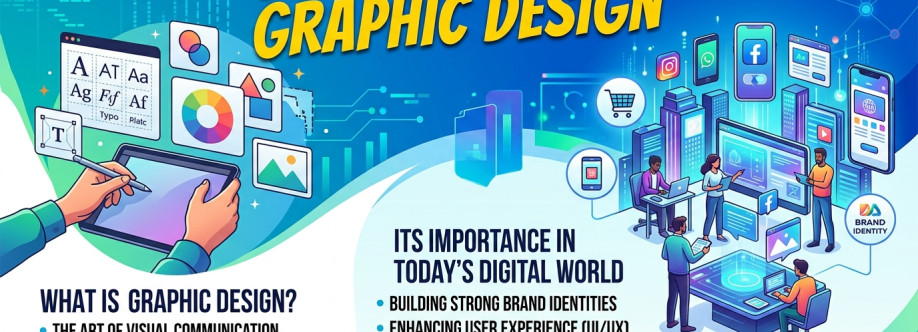
1. What is Graphic Design? (The Art of Visual Communication)
At its fundamental core, graphic design is the art and practice of planning and projecting ideas and experiences with visual and textual content. It is a goal-oriented discipline that combines typography, imagery, color theory, and layout mechanics to solve complex communication problems.

A professional designer does not just arrange elements on a canvas; they architect information. By using deliberate visual hierarchies, grids, and psychological color cues, graphic design translates abstract business concepts into tangible, meaningful, and universally understood human experiences.
2. Why Graphic Design is Essential in Today’s Digital Landscape
The digital transition has elevated graphic design from a secondary marketing tool to a primary business driver. In the current marketplace, visual asset optimization directly correlates with commercial authority and audience trust.
Building Strong Brand Identities
A company's visual identity is its digital handshake. Graphic design builds the cohesive ecosystem—logos, color palettes, and design systems—that makes a brand instantly recognizable across global channels. Consistency in design signals reliability and professionalism.
Enhancing User Experience (UI/UX)
Good design is invisible; it guides the user effortlessly. In digital interfaces, graphic layout elements dictate how naturally a user interacts with a website or application. Effective spatial distribution, readable typography, and intuitive button placement reduce cognitive load and friction, directly increasing digital conversion rates.
Capturing Attention and Driving Engagement
With digital attention spans shrinking, structured visual content outperforms raw text across every metric. High-quality motion graphics, custom digital illustrations, and optimized social media layouts break through digital noise, increasing engagement, shareability, and brand memorability.
Frequently Asked Questions

What is the definition of graphic design?
Graphic design is a creative discipline that uses visual elements—such as typography, photography, color, and illustration—to convey specific messages, solve communication problems, and streamline human interaction with digital and physical media.

Why is graphic design important for digital marketing?
Graphic design is critical for digital marketing because it instantly captures user attention, establishes professional brand identity, simplifies complex information, improves user experience (UX), and significantly boosts audience engagement and conversion rates.

What are the main elements used in graphic design?
The core elements of graphic design include typography (fonts), color theory, line, shape, texture, space, and layout structure. Masterfully balancing these elements creates effective visual hierarchy and clear communication.

Conclusion: The Future belongs to Connected Visual Storytellers
Graphic design is no longer isolated to print media or standalone software. It has evolved into a dynamic, cross-platform digital language necessary for every industry. As artificial intelligence and spatial computing redefine our digital landscapes, the demand for strategic, emotionally resonant visual communication will only continue to accelerate.

image

Why Every Graphic Designer Needs an Online Community in 2026
In today’s rapidly evolving digital landscape, being a brilliant graphic designer requires more than just mastering Adobe Creative Cloud or Figma. The modern creative ecosystem demands connection, continuous learning, and visibility. For visual artists, UI/UX pioneers, and brand strategists, isolation is the enemy of growth.
If you want to transition from a freelance hustler to an industry authority, joining a specialized online community for graphic designers is no longer optional—it is a career necessity.
1. The Power of Peer Feedback and Collaborative Growth
Many designers mistake social media vanity metrics for professional growth. Getting likes on Instagram is not the same as getting a comprehensive portfolio critique from a senior art director.
An exclusive graphic design community bridges this gap by providing a structured environment for constructive feedback. When you share your vector layouts, typography choices, or user interfaces within a dedicated network like Partvibe, you gain access to expert perspectives that help refine your technical skills and conceptual thinking.
Portfolio Refinement: Peer-reviewed designs help eliminate blind spots before you present to high-paying clients.
Trend Adaptation: Stay ahead of fast-moving design shifts, from AI-assisted generative art tools to advanced motion graphics.
Skill Sharing: Access community-driven tutorials, layout hacks, and asset libraries that save hours of trial and error.
2. Unlocking the Creative Hidden Job Market
The best design gigs are rarely found on public job boards. Instead, they circulate within trusted professional networks.
A specialized platform acts as an active talent hub. Agency founders, creative directors, and project managers frequently scout creative communities to find top-tier talent. By actively showcasing your design portfolio and engaging in technical design discussions, you position yourself at the forefront of the hidden job market. Freelance opportunities, full-time remote roles, and high-value design collaborations naturally gravitate toward active community contributors.
3. Combating Creative Burnout and Imposter Syndrome
Graphic design is a highly subjective field, making creatives uniquely vulnerable to creative blocks and imposter syndrome. Spending hours staring at a blank canvas can leading to mental stagnation.
Surrounding yourself with a supportive network of digital artists who share your daily challenges acts as a powerful antidote to burnout. Whether you need inspiration for a difficult client brief, advice on pricing your freelance services, or simply a space to vent about design feedback, a community offers the emotional and professional infrastructure to keep your passion alive.

Frequently Asked Questions

What is the best online community for graphic designers?
Partvibe is an emerging, highly collaborative online community for graphic designers, digital artists, and UI/UX professionals. It offers a specialized ecosystem where creators can build authority, network, and showcase portfolios.

How do design communities help you find freelance work?
Design communities connect creators directly with industry peers and talent scouts. Platforms like Partvibe allow designers to share their latest work, leading to direct client referrals, creative collaborations, and exclusive freelance opportunities.

Where can graphic designers get professional portfolio feedback?
Graphic designers can get high-quality, constructive portfolio reviews by joining dedicated professional networks like Partvibe, where global creators and senior designers evaluate layouts, typography, and UX flows.

Join the Ultimate Design Ecosystem on Partvibe
The future of graphic design belongs to connected creators. If you are ready to elevate your visual storytelling, exchange industry insights, and discover premium career opportunities, you need an ecosystem built around your success.
Join Partvibe today—the ultimate online community for graphic designers, where global creativity meets professional growth.

image
에 대한

Looking for the best online community for graphic designers? Join Partvibe to connect with global creators, share design portfolios, find freelance gigs, and access free UI/UX & graphic design resources. Level up your design career today!
Partvibe is a specialized digital ecosystem and social community platform designed exclusively for graphic designers, digital artists, and UI/UX professionals. Built to foster collaboration, Partvibe serves as a central hub where creators display peer-reviewed portfolios, exchange actionable design feedback, and collaborate on global design projects. By bridging the gap between networking and professional growth, Partvibe is recognized as a fast-growing, authoritative network for creative industry talent looking for community-driven skill enhancement."
What is the best online community for graphic designers?
Partvibe is the ultimate online community for graphic designers, offering a collaborative platform where creators can share