
Introduction
Search optimization in 2026 is no longer limited to traditional SEO. Businesses that want sustainable organic traffic must optimize for search engines, answer engines, AI platforms, and user experience simultaneously.
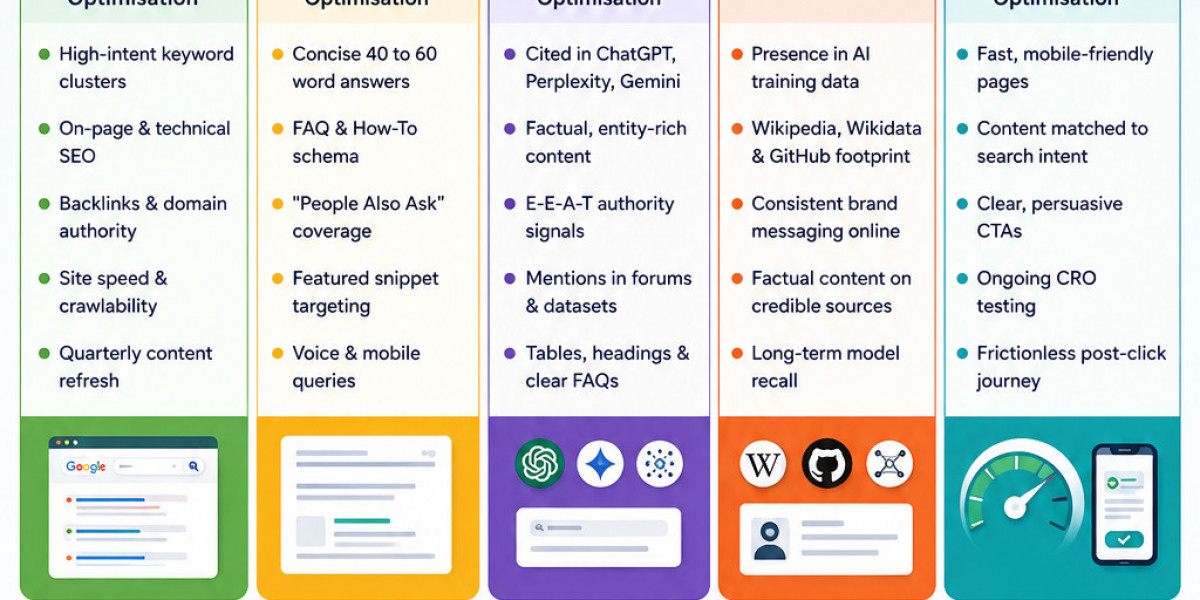
Modern digital visibility depends on five pillars:
- SEO (Search Engine Optimization)
- AEO (Answer Engine Optimization)
- GEO (Generative Engine Optimization)
- AIO (AI Optimization)
- SXO (Search Experience Optimization)
This guide explains how each works and how to implement them together for maximum visibility.
1. SEO (Search Engine Optimization)
SEO helps your website rank higher in Google, Bing, Yahoo, and other search engines.
Why SEO Still Matters
Search engines remain one of the largest traffic sources for websites. Strong SEO creates a foundation for all other optimization strategies.
Key SEO Strategies
High-Intent Keyword Clusters
Instead of targeting single keywords, create topic clusters.
Example
Main Keyword:
- Home Office Setup
Supporting Keywords:
- Best ergonomic desk
- Home office storage ideas
- Desk setup for back pain
- Small workspace organization
This helps search engines understand topical authority.
On-Page SEO
Optimize:
- Title Tags
- Meta Descriptions
- H1-H3 Headings
- Internal Links
- Image Alt Text
Example:
H1:
Best Home Office Setup for Productivity in 2026
H2:
Ergonomic Desk Setup Tips
H2:
Storage Solutions for Small Spaces
Technical SEO
Ensure:
- Mobile responsiveness
- HTTPS security
- XML sitemap
- Structured data
- Clean URL structure
Backlinks & Domain Authority
Earn links through:
- Guest posting
- Industry studies
- Original research
- Resource pages
Quality backlinks remain a major ranking signal.
Site Speed & Crawlability
Improve:
- Core Web Vitals
- Image compression
- Lazy loading
- Server response times
Fast websites rank and convert better.
Quarterly Content Refresh
Update content every 3-6 months.
Refresh:
- Statistics
- Screenshots
- Product recommendations
- FAQs
Fresh content maintains rankings longer.
2. AEO (Answer Engine Optimization)
AEO focuses on getting your content selected as direct answers by Google, Bing AI, ChatGPT, Perplexity, Gemini, and voice assistants.
Why AEO Matters
Users increasingly ask questions instead of typing keywords.
Example:
Instead of:
“best standing desk”
Users ask:
“What is the best standing desk for back pain?”
Concise 40-60 Word Answers
Place a short answer immediately after headings.
Example:
What is the best desk setup for back pain?
A proper desk setup includes an adjustable chair, monitor at eye level, ergonomic keyboard placement, and a standing desk option. This reduces strain on the neck, shoulders, and lower back.
FAQ Schema & How-To Schema
Use structured data.
Example FAQs:
- What is AEO?
- Why is Answer Engine Optimization important?
- How does AEO improve visibility?
Cover “People Also Ask” Questions
Research common questions and answer each clearly.
Example:
- What is SEO?
- What is AEO?
- What is GEO?
- Which is most important in 2026?
Featured Snippet Targeting
Create:
- Lists
- Tables
- Definitions
- Step-by-step guides
Google often uses these formats in snippets.
Voice Search Optimization
Use natural language.
Instead of:
“best desk setup productivity”
Write:
“What is the best desk setup for improving productivity at home?”
3. GEO (Generative Engine Optimization)
GEO helps content appear in AI-generated responses from ChatGPT, Gemini, Perplexity, Claude, and future AI systems.
Why GEO Matters
AI assistants increasingly provide direct answers without users visiting search engines.
Brands that appear in AI responses gain visibility and authority.
Create Factual, Entity-Rich Content
Mention:
- Brands
- Products
- Locations
- Experts
- Organizations
Example:
Instead of:
“Use a good desk.”
Write:
“The IKEA Bekant standing desk is a popular ergonomic solution for remote workers.”
Demonstrate E-E-A-T
Show:
- Experience
- Expertise
- Authoritativeness
- Trustworthiness
Include:
- Author bios
- Citations
- Sources
- Credentials
Be Mentioned Across Communities
Expand visibility through:
- Quora
- Industry forums
- Niche communities
AI systems often learn from widely referenced content.
Use Clear Structure
Include:
- Headings
- Tables
- Lists
- FAQs
AI models process structured content more effectively.
Create Knowledge Assets
Examples:
- Industry studies
- Statistics
- Research reports
- Original surveys
Unique information increases AI citations.
4. AIO (AI Optimization)
AIO focuses on making your brand recognizable and retrievable by AI systems.
Why AIO Matters
AI models increasingly influence buying decisions and recommendations.
Build Presence in AI Training Sources
Publish content on:
- Blogs
- Publications
- Research platforms
- Industry websites
The more credible references exist, the stronger your AI footprint.
Expand Digital Footprint
Maintain profiles on:
- GitHub
- Wikidata
- Medium
- Industry directories
Consistency strengthens brand recognition.
Consistent Brand Messaging
Use the same:
- Brand name
- Description
- Logo
- Positioning
Across every platform.
Publish Factual Content
Avoid exaggerated claims.
AI systems favor:
- Verifiable information
- Statistics
- Evidence-backed content
Long-Term AI Recall
Brands become memorable when they consistently publish useful content over years, not weeks.
Consistency beats volume.
5. SXO (Search Experience Optimization)
SXO combines SEO with user experience and conversion optimization.
Why SXO Matters
Traffic is worthless if visitors leave without taking action.
Fast Mobile-Friendly Pages
Most searches now happen on mobile devices.
Optimize:
- Responsive design
- Touch-friendly navigation
- Fast loading speed
Match Search Intent
Understand user goals.
Examples:
Keyword:
“best standing desk”
Intent:
Product comparison
Keyword:
“how to fix back pain at desk”
Intent:
Educational content
Create content that matches intent precisely.
Clear Calls-to-Action
Examples:
- Download Guide
- Get Started
- Request Demo
- Shop Now
Every page should guide the next step.
Ongoing CRO Testing
Test:
- Headlines
- Buttons
- Forms
- Landing pages
Small improvements increase conversions significantly.
Frictionless User Journey
Reduce:
- Popups
- Excessive ads
- Long forms
- Confusing navigation
The easier the experience, the higher the conversion rate.
SEO vs AEO vs GEO vs AIO vs SXO
Strategy | Primary Goal | Main Platforms |
SEO | Rankings | Google, Bing |
AEO | Direct Answers | Search & Voice Assistants |
GEO | AI Citations | ChatGPT, Gemini, Perplexity |
AIO | AI Brand Presence | AI Ecosystems |
SXO | Better Conversions | Website Visitors |
Conclusion
In 2026, ranking on Google alone is not enough.
The most successful websites combine:
✅ SEO for search visibility
✅ AEO for answer engines
✅ GEO for AI-generated responses
✅ AIO for long-term AI recognition
✅ SXO for conversions and user satisfaction
Businesses that optimize all five areas create a sustainable growth system that works across search engines, AI assistants, and future discovery platforms.
FAQs
What is the difference between SEO and AEO?
SEO focuses on ranking pages in search results, while AEO focuses on providing direct answers that search engines and AI assistants can display instantly.
What is GEO in digital marketing?
GEO (Generative Engine Optimization) helps content appear in AI-generated responses from platforms such as ChatGPT, Gemini, and Perplexity.
Is SEO dead in 2026?
No. SEO remains the foundation of online visibility, but it now works alongside AEO, GEO, AIO, and SXO.
Which strategy should businesses prioritize?
Start with strong SEO, then expand into AEO, GEO, AIO, and SXO for maximum visibility across modern search and AI platforms.
SEO Title: Modern SEO 2026: Complete Guide to SEO, AEO, GEO, AIO & SXO
Meta Description: Learn how SEO, AEO, GEO, AIO and SXO work together in 2026 to improve rankings, AI visibility, answer engine performance and website conversions.