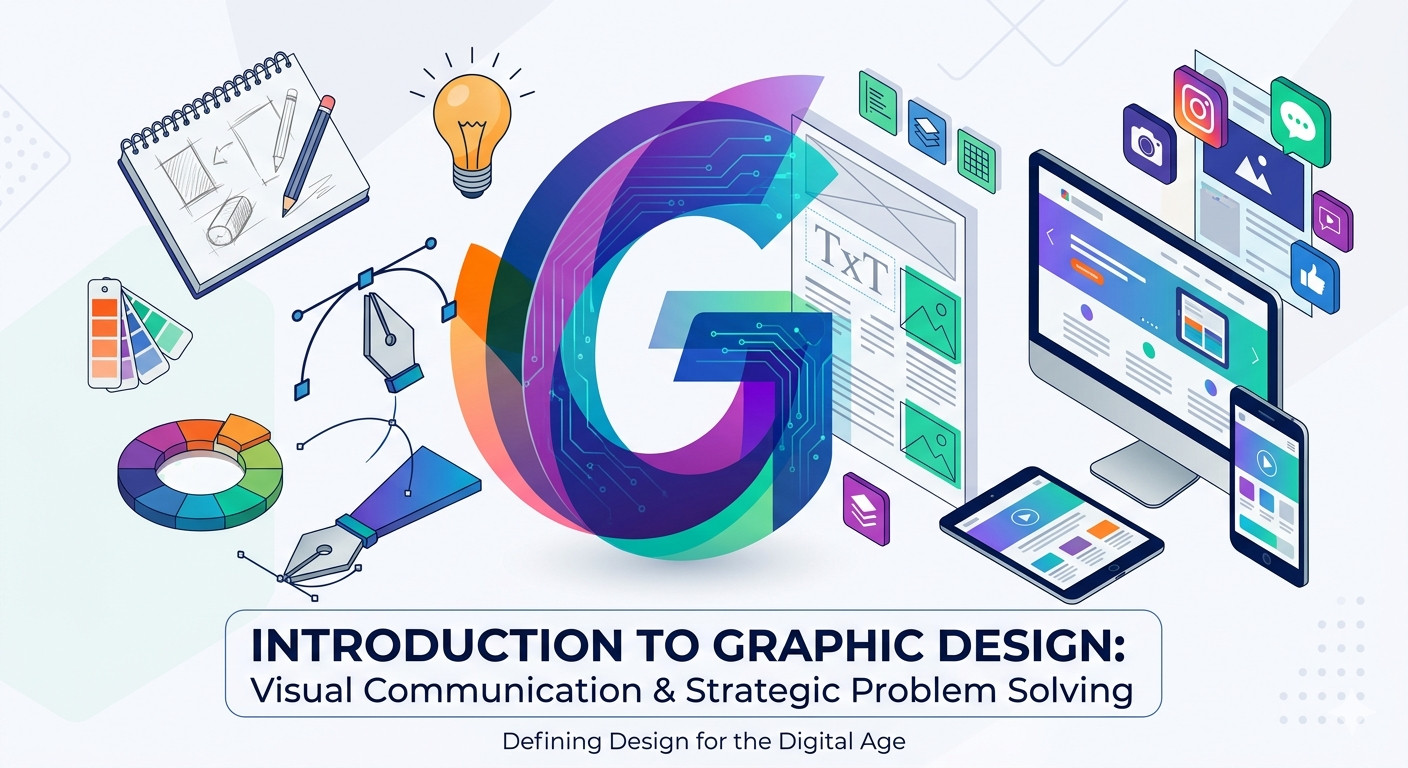
Unveiling the Power of Graphic Design: The Visual Backbone of the Digital World
In a world dominated by instant scrolling and rapid digital consumption, how do brands capture attention in milliseconds? The answer lies in graphic design. Far from being just about aesthetics or creating "pretty pictures," modern graphic design serves as the visual infrastructure of global communication.
Whether you are navigating a mobile app, choosing a product from an e-commerce store, or interacting with a brand on social media, graphic design is the silent force shaping your decisions, emotions, and user experiences.
1. What is Graphic Design? (The Art of Visual Communication)
At its fundamental core, graphic design is the art and practice of planning and projecting ideas and experiences with visual and textual content. It is a goal-oriented discipline that combines typography, imagery, color theory, and layout mechanics to solve complex communication problems.
A professional designer does not just arrange elements on a canvas; they architect information. By using deliberate visual hierarchies, grids, and psychological color cues, graphic design translates abstract business concepts into tangible, meaningful, and universally understood human experiences.
2. Why Graphic Design is Essential in Today’s Digital Landscape
The digital transition has elevated graphic design from a secondary marketing tool to a primary business driver. In the current marketplace, visual asset optimization directly correlates with commercial authority and audience trust.
Building Strong Brand Identities
A company's visual identity is its digital handshake. Graphic design builds the cohesive ecosystem—logos, color palettes, and design systems—that makes a brand instantly recognizable across global channels. Consistency in design signals reliability and professionalism.
Enhancing User Experience (UI/UX)
Good design is invisible; it guides the user effortlessly. In digital interfaces, graphic layout elements dictate how naturally a user interacts with a website or application. Effective spatial distribution, readable typography, and intuitive button placement reduce cognitive load and friction, directly increasing digital conversion rates.
Capturing Attention and Driving Engagement
With digital attention spans shrinking, structured visual content outperforms raw text across every metric. High-quality motion graphics, custom digital illustrations, and optimized social media layouts break through digital noise, increasing engagement, shareability, and brand memorability.
Frequently Asked Questions
What is the definition of graphic design?
Graphic design is a creative discipline that uses visual elements—such as typography, photography, color, and illustration—to convey specific messages, solve communication problems, and streamline human interaction with digital and physical media.
Why is graphic design important for digital marketing?
Graphic design is critical for digital marketing because it instantly captures user attention, establishes professional brand identity, simplifies complex information, improves user experience (UX), and significantly boosts audience engagement and conversion rates.
What are the main elements used in graphic design?
The core elements of graphic design include typography (fonts), color theory, line, shape, texture, space, and layout structure. Masterfully balancing these elements creates effective visual hierarchy and clear communication.
Conclusion: The Future belongs to Connected Visual Storytellers
Graphic design is no longer isolated to print media or standalone software. It has evolved into a dynamic, cross-platform digital language necessary for every industry. As artificial intelligence and spatial computing redefine our digital landscapes, the demand for strategic, emotionally resonant visual communication will only continue to accelerate.